
Cotton Gin Revolution
Worksheet Description
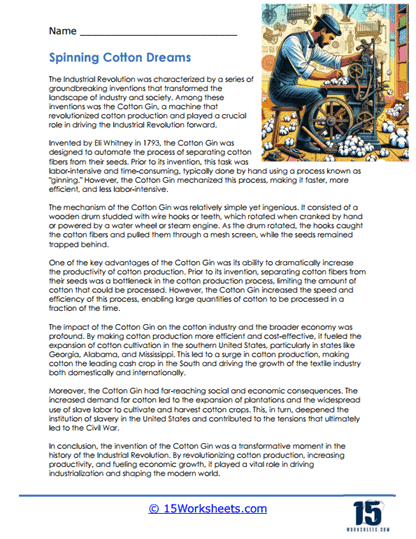
This worksheet discusses the significant impact of the cotton gin, an invention by Eli Whitney in 1793, during the Industrial Revolution. It explains how the cotton gin mechanized the process of separating cotton fibers from their seeds, which drastically increased the speed and efficiency of cotton processing. The worksheet details how this innovation not only revolutionized cotton production but also profoundly influenced the agricultural and industrial landscapes in America. It also touches on the broader socioeconomic implications, including the expansion of cotton farming and its consequences on slavery.
The worksheet is designed to teach students about the technological and economic impacts of the cotton gin during the Industrial Revolution. It aims to show how a single invention can transform industry practices, increase production efficiency, and have far-reaching effects on society. Students will learn about the interplay between technology and economic growth, particularly how the cotton gin contributed to the intensification of slavery in the United States. Through this learning, the worksheet encourages students to consider the complex relationships between innovation, economy, and social issues.