
Cell Comparison Collage
Worksheet Description
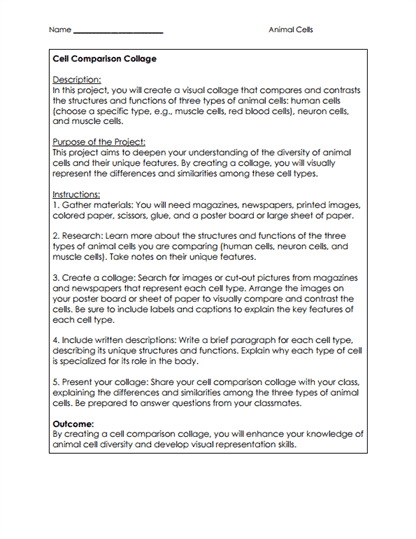
In this project, you will create a visual collage that compares and contrasts the structures and functions of three types of animal cells: human cells (choose a specific type, e.g., muscle cells, red blood cells), neuron cells, and muscle cells. This project aims to deepen your understanding of the diversity of animal cells and their unique features. By creating a collage, you will visually represent the differences and similarities among these cell types.
The “Cell Comparison Collage” worksheet guides students in creating a visual representation that compares and contrasts three specific types of animal cells: human cells, neuron cells, and muscle cells. Through this collage, students will delve into the distinct structures and functions of each cell type. The project encompasses various stages, including research, gathering materials, and crafting a detailed collage. The ultimate goal is to offer a visual demonstration of the diversity and unique characteristics of these cell types.
To successfully execute this project, students should start by gathering the necessary materials like magazines, newspapers, and other visual resources. Following this, they’ll conduct research to comprehend the structures and functions of the three cell types, taking notes on distinctive features. With their research in hand, they’ll then seek out images or cut-outs that represent each cell type, arranging them on a board and juxtaposing them to highlight similarities and differences. For each cell represented, a descriptive paragraph will be written, detailing its unique structures, functions, and its specialized role within the body.
This worksheet is tailored to enhance students’ understanding of the diversity and complexity of animal cells. By undertaking this project, learners will not only deepen their knowledge about the specific features and roles of different cell types but will also hone their skills in visual representation and comparison. Furthermore, the exercise promotes critical thinking as students discern and illustrate the intricacies of each cell type. The interactive nature of the project, where students present and discuss their collages, fosters collaborative learning and encourages open dialogue about cellular diversity.