
Internal And External
Worksheet Description
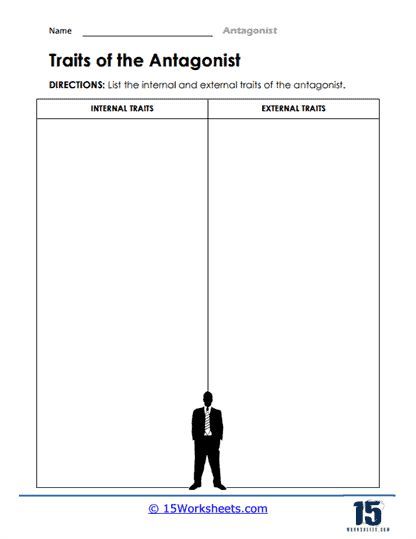
This worksheet serves as a strategic tool for character development, inviting writers to delve into the complexities of their antagonist by separating their characteristics into internal and external traits. Internal traits refer to the personality, emotions, and motivations that drive the antagonist’s actions and decisions. By listing these traits, the writer begins to construct a psychological profile that explains why the antagonist opposes the protagonist and how their internal conflicts shape the narrative. This exploration aids in creating a three-dimensional character whose actions stem not only from villainous intent but from relatable human desires and fears.
In contrast, external traits encompass the physical appearance, mannerisms, and observable behaviors that define how the antagonist interacts with their world and how others perceive them. By detailing these traits, the writer gives the antagonist a distinct presence, making them memorable and vivid in the reader’s mind. These traits often complement the internal characteristics, providing a visual and behavioral manifestation of the antagonist’s psychological state. This thorough characterization is crucial as it not only enhances the realism of the character but also reinforces the thematic elements of the story through the antagonist’s embodied existence.