
Vacuoles and Storage
Worksheet Description
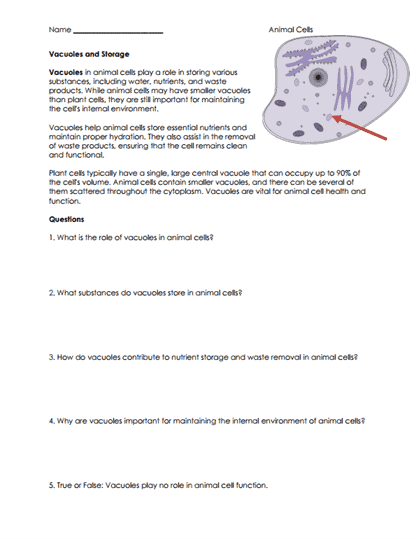
This worksheet focuses on vacuoles within animal cells, highlighting their critical role in storing a variety of substances, including water, nutrients, and waste products. It draws a comparison between vacuoles in animal and plant cells, pointing out the differences in size and prevalence. The text underscores the importance of vacuoles in ensuring proper hydration and facilitating waste removal, which contributes to maintaining the cell’s internal environment. A complementary illustration portrays the position and structure of vacuoles in an animal cell, making the concept visually comprehensible.
To effectively navigate this worksheet, students should initiate their study by reading the descriptive text attentively, ensuring they understand the primary functions and characteristics of vacuoles in animal cells. The provided diagram can serve as a visual reference, helping students visualize the placement and structure of vacuoles within the cell. After a comprehensive reading of the main content, students should proceed to the questions, using the primary text as a guide to craft their responses. Lastly, reviewing answers and cross-referencing with the main content is recommended for optimal understanding and retention.
The worksheet endeavors to impart knowledge about the significance of vacuoles within the context of animal cell biology. It seeks to elucidate the multifaceted role of vacuoles, from storing essential nutrients to aiding in waste disposal, all of which culminate in sustaining a balanced internal cellular environment. By juxtaposing vacuoles in animal cells with those in plant cells, the worksheet fosters a deeper understanding of cellular differences across species. Through the combination of textual information and probing questions, students are encouraged to critically think, analyze, and appreciate the nuanced role vacuoles play in cell health and function.