
Beloved
Worksheet Description
“Beloved” by Toni Morrison is a haunting and powerful novel that explores the enduring legacy of slavery on the lives of African Americans in the years following the Civil War. Set in Ohio in the late 19th century, the story revolves around Sethe, a former enslaved woman who has escaped to freedom but is haunted by the traumatic memories of her past. Her life takes a tumultuous turn when a mysterious young woman named Beloved appears at her doorstep, seemingly from the past. As Sethe and her community grapple with the past and its painful repercussions, the novel delves deep into the themes of identity, motherhood, trauma, and the profound impact of slavery on the human psyche. Toni Morrison’s lyrical prose and skillful narrative structure create a mesmerizing and emotionally charged reading experience that won her the Nobel Prize in Literature in 1993.
“Beloved” is a novel that confronts the reader with the brutal history of slavery and its enduring psychological scars. Through its vivid characters and haunting storytelling, the book vividly illustrates the physical and emotional horrors of slavery while also emphasizing the resilience and strength of those who survived. Morrison’s exploration of the complexities of memory and the blurred lines between the past and the present makes “Beloved” a profound and thought-provoking work of literature that continues to be celebrated for its exploration of the African American experience and its impact on the collective consciousness of America.
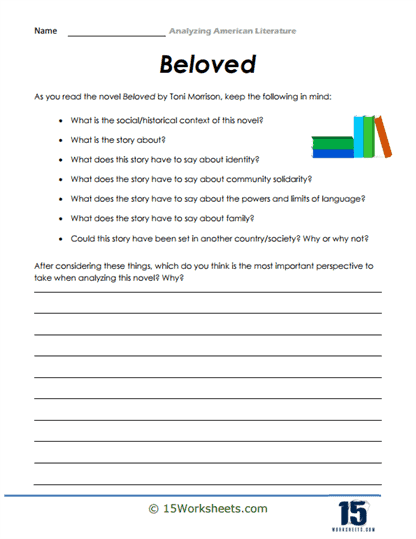
As you read the novel Beloved by Toni Morrison, keep the following in mind.
- What is the social/historical context of this novel?
- What is the story about?
- What does this story have to say about identity?
- What does the story have to say about community solidarity?
- What does the story have to say about the powers and limits of language?
- What does the story have to say about family?
- Could this story have been set in another country/society? Why or why not?
After considering these things, which do you think is the most important perspective to take when analyzing this novel? Why?