
Adaptability of Microorganisms
Worksheet Description
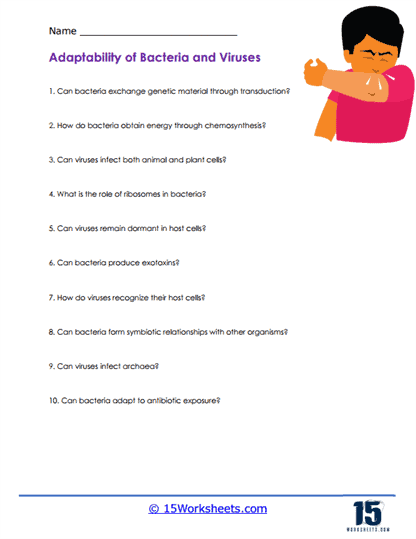
The worksheet explores how bacteria and viruses adapt, interact, and sustain in various environments. Through a set of ten pointed questions, it touches upon topics like genetic material exchange, energy acquisition mechanisms, and interactions with both cellular and multi-organismal hosts. The depicted image of a thoughtful individual underscores the contemplative nature of the questions, signaling the complexities inherent in understanding these microscopic entities’ adaptability. The worksheet serves as a concise exploration of how bacteria and viruses have evolved to be versatile and resilient in the face of diverse challenges.
To proficiently tackle this worksheet, students should initiate their approach by carefully reading each question, discerning the specific adaptability trait or interaction it highlights. Given the complexity of the topics, drawing from prior knowledge of microbiology will be beneficial. For intricate questions or areas of uncertainty, turning to academic resources, classroom lectures, or reliable online sources can provide in-depth insights. After formulating answers, it’s advisable for students to review their responses, ensuring they’ve captured the essence of bacteria and viruses’ adaptability nuances.
The worksheet’s primary objective is to usher students into the intricate world of bacterial and viral adaptability. It endeavors to cultivate an understanding of how these microorganisms adjust, evolve, and establish relationships to thrive in varying conditions. With questions spanning from the genetic to the ecological, the sheet prompts learners to appreciate the diverse strategies these organisms employ for survival. Ultimately, it aspires to equip students with a comprehensive grasp of bacterial and viral resilience, emphasizing their ever-evolving nature in the face of external pressures.